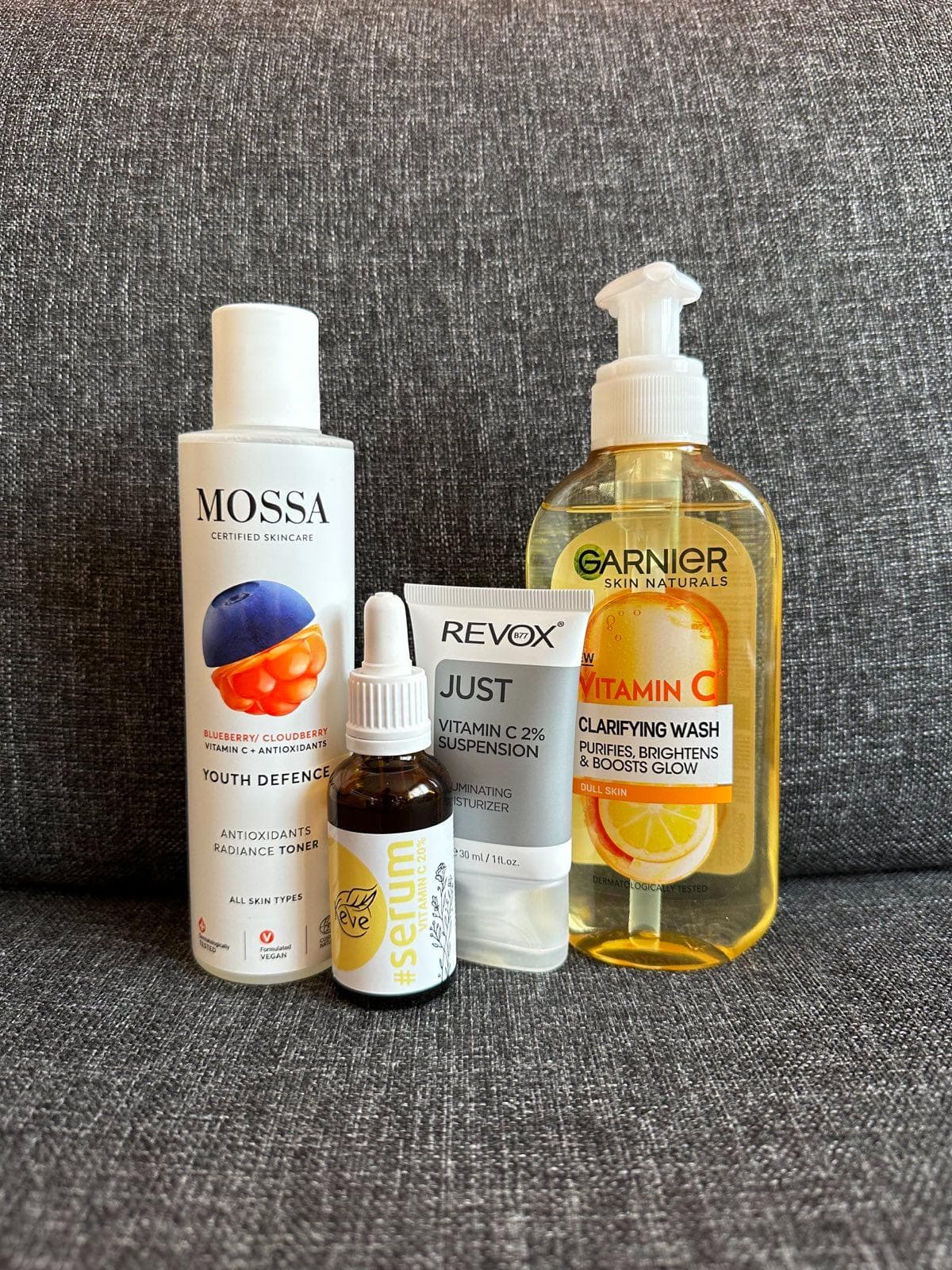
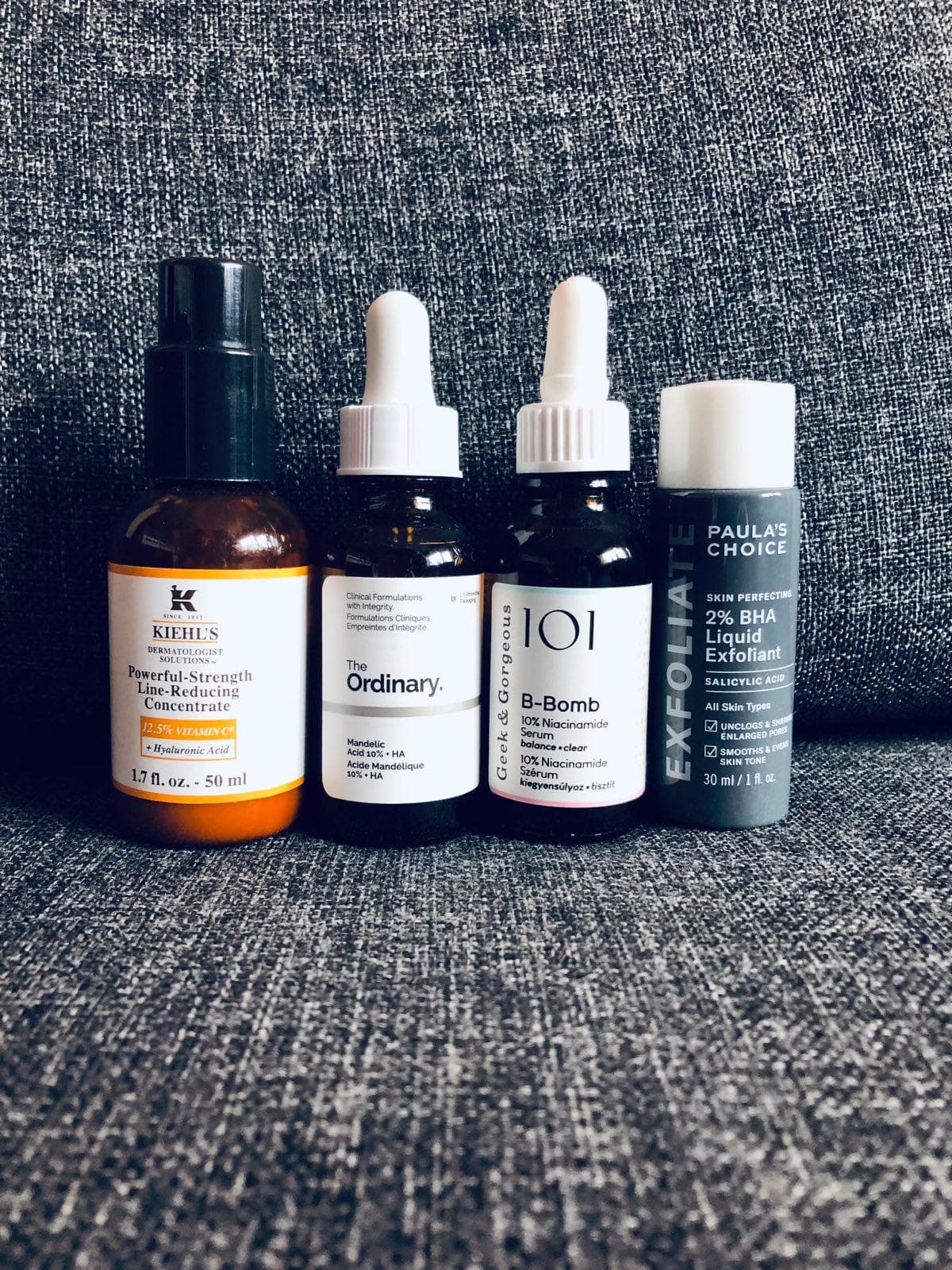
Chemical Exfoliants
 Zoom
ZoomOver the past few years, chemical exfoliants have "become a staple in conscious skincare routines." These products are capable of removing dead skin cells and targeting a range of specific skin concerns.
A chemical exfoliant works on a similar principle to a physical scrub — both support the skin's natural renewal process. However, the chemical version is gentler: it dissolves the bonds between dead skin cells, rather than physically abrading the skin surface, which can cause micro-tears and irritation.
AHA Acids
The most widely used exfoliating acids, which remove dead skin cells from the outer layers of the skin, stimulate collagen production, and fade pigmentation.
Lactic Acid: Evens out skin texture; recommended for dry and dehydrated skin.
Glycolic Acid: "The most effective AHA acid," derived from sugarcane. It can penetrate deeper layers of the skin, but it increases sun sensitivity — SPF 50 sunscreen is essential alongside it.
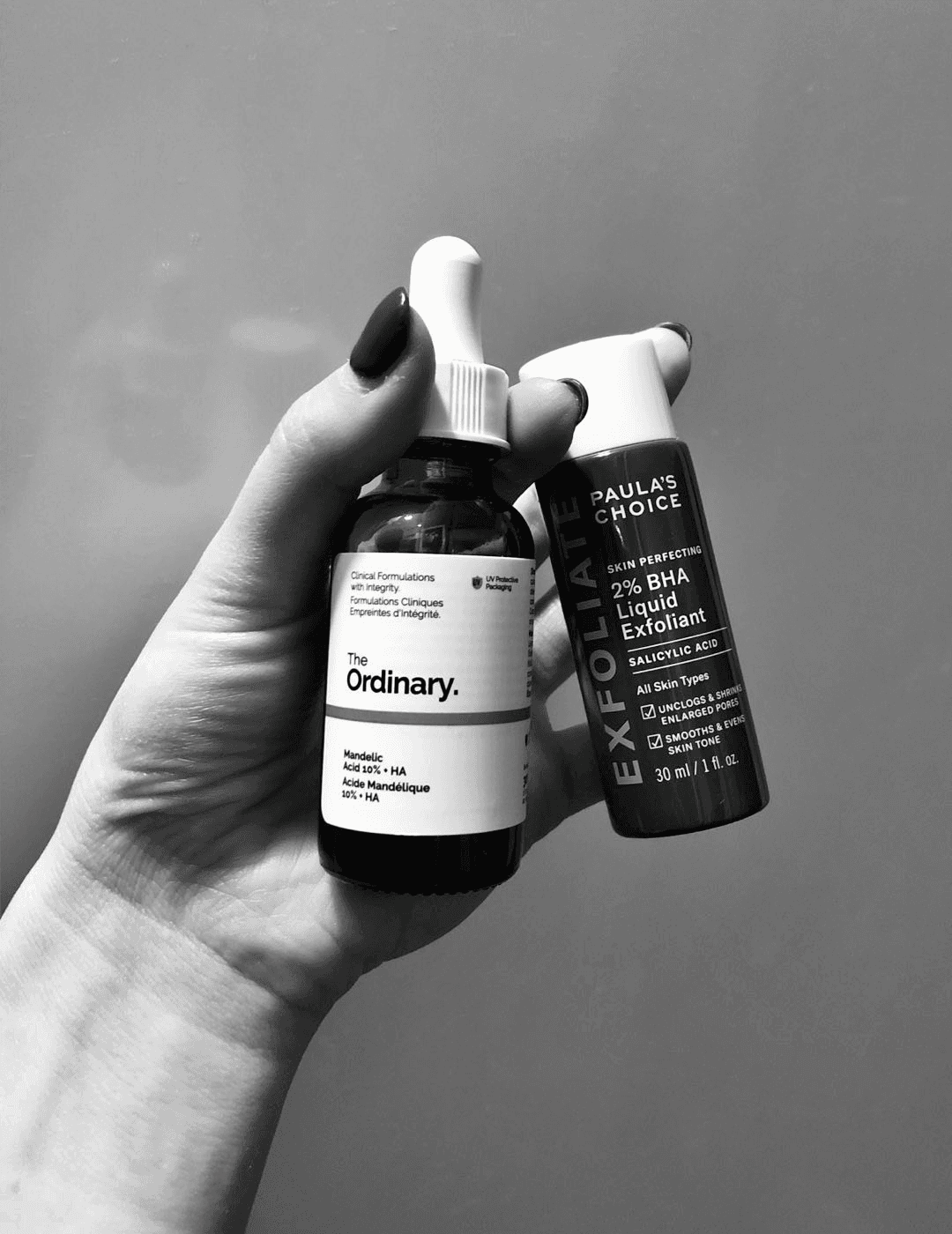
Mandelic Acid: An oil-soluble acid, beneficial for combination and oily skin, and may also suit rosacea-prone skin.
Citric Acid: Recommended for sun-damaged skin; reduces sun-induced brown spots.
Tartaric Acid and Malic Acid: Acids derived from fruits, with antioxidant properties.
BHA Acid
The only type is salicylic acid, derived from willow bark. It penetrates deep into pores to exfoliate from within — ideal for acne-prone, blackhead-prone, and enlarged-pore skin types.
PHA Acids
Often called next-generation AHA acids, as their effects are similar but gentler. Ideal for sensitive and dehydrated skin.
Lactobionic Acid: Derived from milk sugar; supports a youthful-looking complexion.
Maltobionic Acid: Helps prevent a decline in collagen production; recommended for dry skin.
Important Notes
Azelaic acid and hyaluronic acid are technically acids, but they do not exfoliate. AHA acids (with the exception of glycolic acid) do not increase sun sensitivity — however, daily use of at least SPF 30, and SPF 50 in summer, is always recommended when using them.
Share
About the author

Views
Disclaimer
Related posts